
Why do Materials Matter for Global Climate Action?

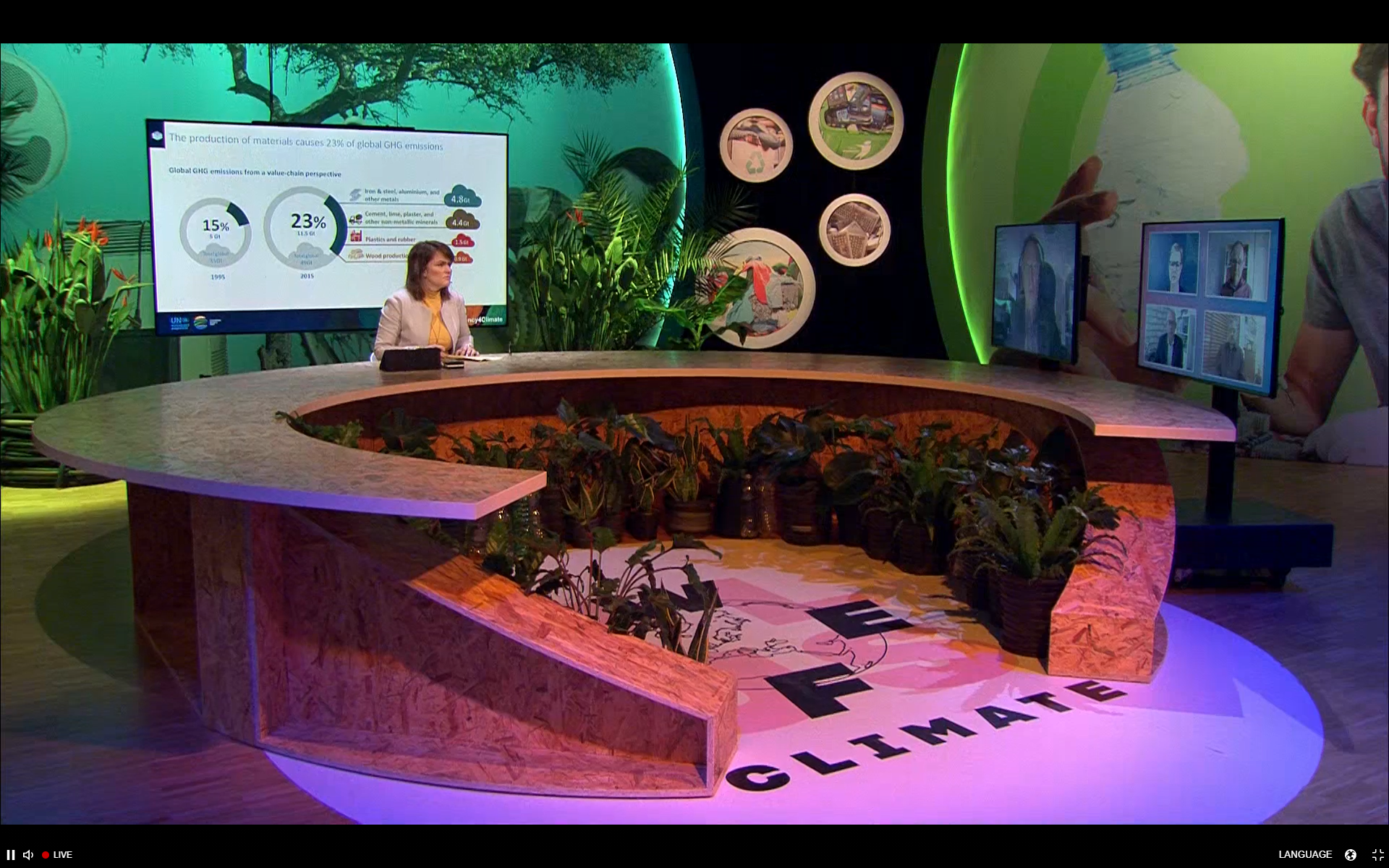
On 15-16 April 2021 the World Circular Economy Forum + Climate (WCEF) was held. The virtual summit was organized jointly by the Netherlands’ Ministry of Infrastructure and Water Management and Ministry of Foreign Affairs, and the Finnish Innovation Fund Sitra. The WCEF aimed to draw attention to the importance of a circular economy in reaching the climate goals.
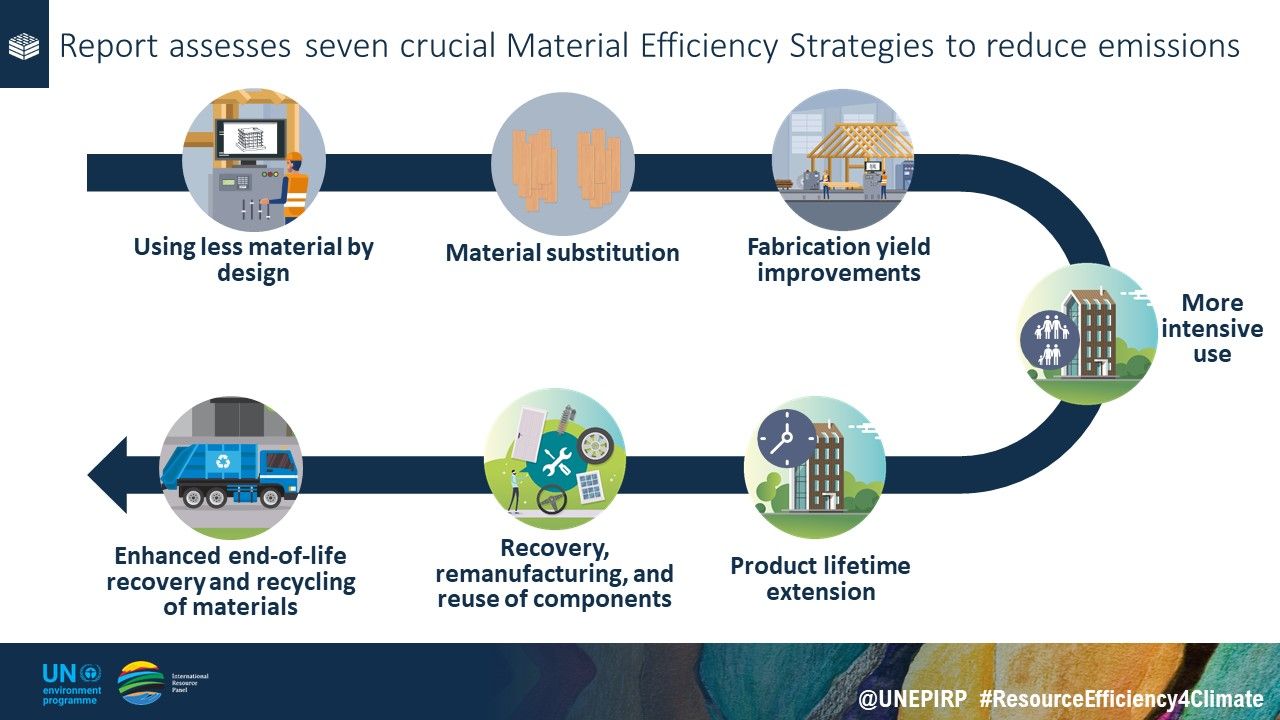
Professor Edgar Hertwich presented the results from the IRP report on Resource Efficiency & Climate Change. This report examines the mitigation opportunities presented by higher material efficiency in the production and use of residential buildings and high-duty vehicles.
During the session, representatives of governments, businesses and research institutes introduced multiple ways in which the circular economy can reduce the carbon footprint throughout the value chain, and how these can be incorporated in policymaking.
We sum up the discussion in 7 key messages:
1. The Global Resources Outlook shows that the extraction and processing of the resources causes 50% of global climate change, and 80% of water stress and land-related global biodiversity loss. However, material efficiency has largely been overlooked in climate policy until now. Janez Potocnik
2. The Resource Efficiency and Climate Change study identified the most promising opportunities to decrease emissions through material efficiency in the building and transport sectors. The most effective strategy is more intensive use by using less space and taking fewer individual rides. It implies important changes in the ways we live and move (shared cars, multi-family homes). Edgar Hertwich
3. Automobile industry is starting to look at the material efficiency strategies, including recycling, reparability, longer lifetime of vehicles, design, etc. We need to focus on things that can be done quick, such as, recover and reuse of materials from old vehicles and increase shared mobility. Anirban Ghosh
4. Implementing better regulations (i.e, waste regulation, taxation of activities) can incentives business to make improvements and it is great way to initiate performance changes. Andrew Spencer
5. Policymakers need to be braver and use the tools they have (regulation, taxation, legislation, etc.). We also need international agreements to have the same kind of rules for everyone. HE Krista Mikkonen
6. Sustainable lifestyle needs to be easier and cheaper. HE Krista Mikkonen
7. Consumers need to have freedom and transparency to make their choices but, at the same time, governments need to set the market conditions. For instance, prices need to be correct and make sustainable choices affordable. Janez Potocnik and Edgar Hertwich
You can watch the session again here!
A well remembered kit can shape how supporters talk about a team because fans often compare the emotional pull of old and new designs. Collectors interested in Tottenham Hotspur often look at how different seasons changed the shape and details of the shirt. Among the options linked to club identity, how to choose a Borussia Dortmund football shirt is connected to the way fans compare eras, colours, and shirt details. The interest in classic kits keeps the paragraph grounded in football culture rather than simple promotion.